






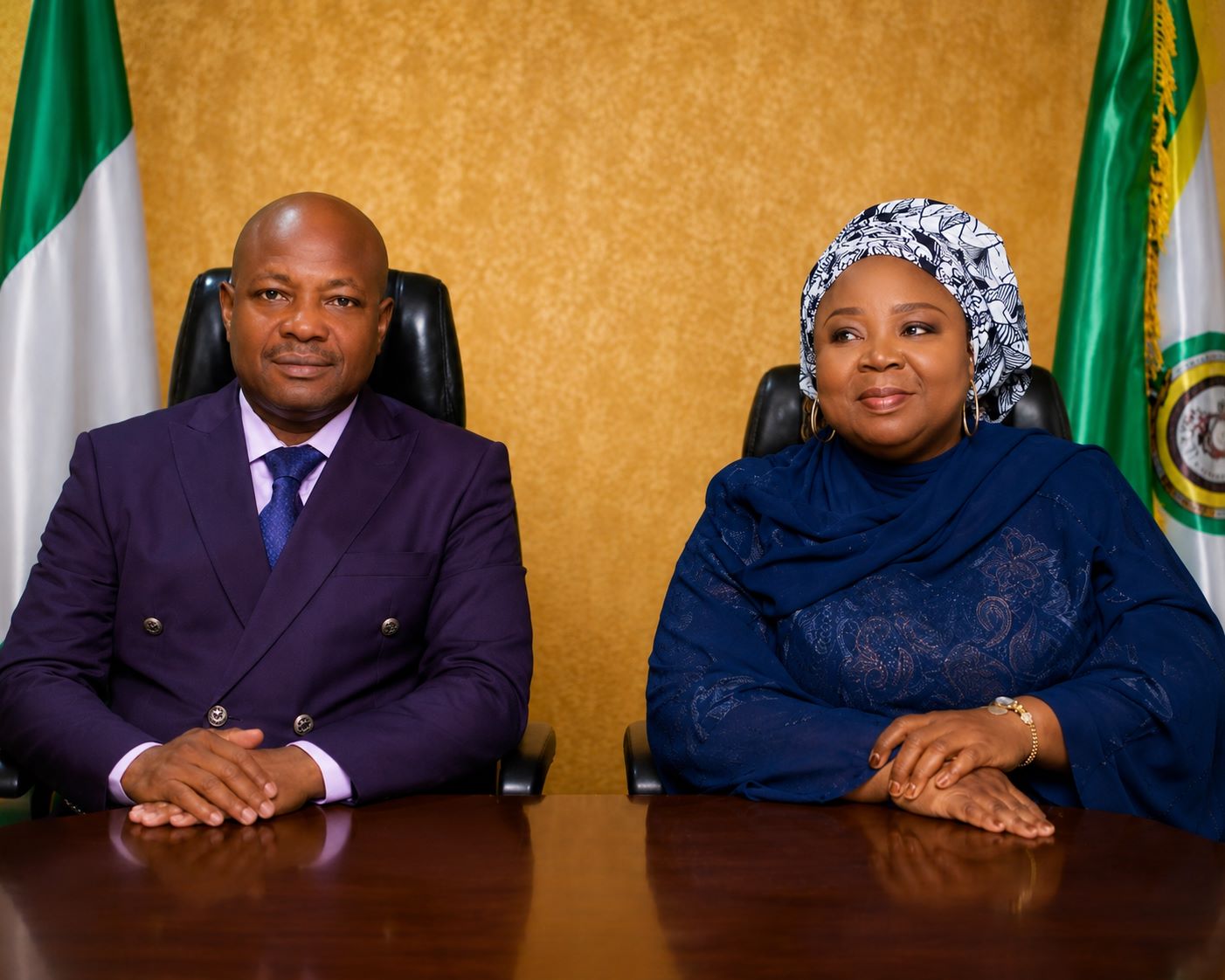
The International Press Institute (IPI Nigeria) has stated that its decision to immortalise the late Hajia Rafat Salami and to honour the Director-General of the Department of State Services (DSS), Mr. Oluwatosin Ajayi, stems from their profound contributions to press freedom, professional integrity, and constructive engagement with the media community. The Institute said the two figures represent courage, responsibility, and transformational leadership at a time Nigerian journalism faces unprecedented threats.
IPI Nigeria made this known during its 2025 Conference and Annual General Meeting in Abuja, where President Musikilu Mojeed paid glowing tributes to the late Hajia Rafat Salami and highlighted the exemplary conduct of the DSS Director-General in restoring confidence between journalists and security operatives.
In his address, Mr. Mojeed described Hajia Rafat Salami as a symbol of dedication, sacrifice, and unwavering commitment to journalistic ideals.
He recalled that at the 2024 Conference and AGM, despite being in severe pain and confined to a wheelchair, Rafat insisted on attending. She welcomed guests, coordinated logistics, took photographs, and served diligently until her health failed.
“Her commitment was a reminder that journalism is not merely a job; it is a calling. It demands sacrifice. It demands conviction,” he said.
The IPI Nigeria President announced that the organisation had raised funds to support her family shortly after her passing.
“More importantly, the National Committee decided to immortalise her by endowing a journalism prize in her name at the University of Abuja, her alma mater,” The organization said.
The annual prize, accordung to him, will reward young journalists who embody Rafat’s values of integrity, courage, resilience, and selfless service.
“Her legacy deserves to live on. Rafat’s life is a standard future generations must learn from,” he added.
IPI Nigeria also outlined why it is honoured the DSS Director-General, Mr. Oluwatosin Ajayi, for his responsible, collaborative, and reform-oriented approach to media-security relations.
Earlier in the year, he said, the SSS accused some media organisations of publishing falsehoods about its role in the Lagos Assembly crisis, adding that rather than resort to hostility or repression, Mr. Ajayi engaged IPI Nigeria constructively, allowing both sides to clarify issues, resolve tensions, and preserve press freedom.
Similarly, under his leadership, the Service removed the name of veteran journalist and rights advocate Lanre Arogundade from its watchlist after nearly 40 years of repeated harassment, he said.
IPI Nigeria described this as a “historic corrective action” that demonstrated the DSS DG’s commitment to lawful conduct and respect for the media.
The Institute said recognising Mr. Ajayi is part of its strategy to encourage security agencies to emulate professional, rights-respecting models of engagement.
In its wider advocacy efforts this year, IPI Nigeria deepened its interventions to protect journalists from harassment, threats, and unlawful pressure.
The Institute engaged security agencies, the National Assembly, state governments, and media stakeholders to defend journalists’ rights and expand civic space at a time the media landscape faces aggressive repression.
The organisation intervened in the eviction of Channels TV journalist Christopher Moffat and his cameraman Kufre Ikpe from the Akwa Ibom Government House, and also attempted to mediate in the conflict between Niger State Governor Umaru Bago and Badeggi FM in Minna.
IPI Nigeria also actively advocated for the release of MediaRoom Hub Founder Azuka Ogujiuba, who was harassed by the police for reporting a court case.
The organisation rallied support for a member who faced major medical challenges and celebrated the retirement of notable members including Hajia Sani, former Director, Digital Media at the Voice of Nigeria.
Speaking on the country’s worsening press freedom climate, Mr. Mojeed warned that Nigeria has fallen ten places in the global Press Freedom Ranking—from 112 in 2024 to 122 in 2025 due to consistent and widespread repression across states and institutions.
He cited incidents of arbitrary arrests, newsroom closures, intimidation of investigative journalists, weaponisation of the Cybercrime Act, and violent attacks on reporters covering protests.
He emphasised that “Journalism is not a crime, and journalists are not criminals,” urging the Federal Government to call state governors, security agencies, and other officials to order.
He said Nigeria must review outdated laws, including cybercrime and criminal defamation provisions, and create a functional national mechanism to protect journalists.
IPI Nigeria noted that honouring individuals like Rafat Salami and the DSS Director-General aligns with its mission to uphold press freedom, reward integrity, and encourage institutions and professionals who strengthen democratic accountability.
“These gestures reflect our commitment to acknowledging those who make journalism safer, more ethical, and more resilient,” the Institute said.
